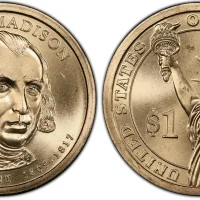
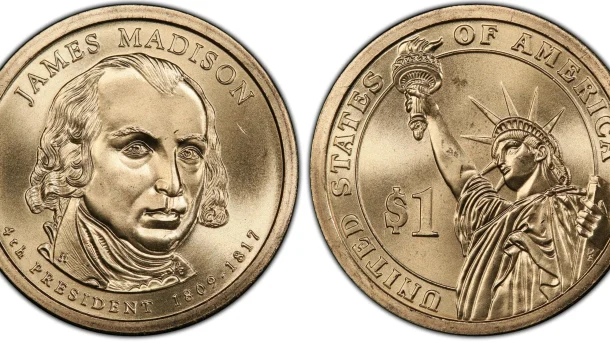
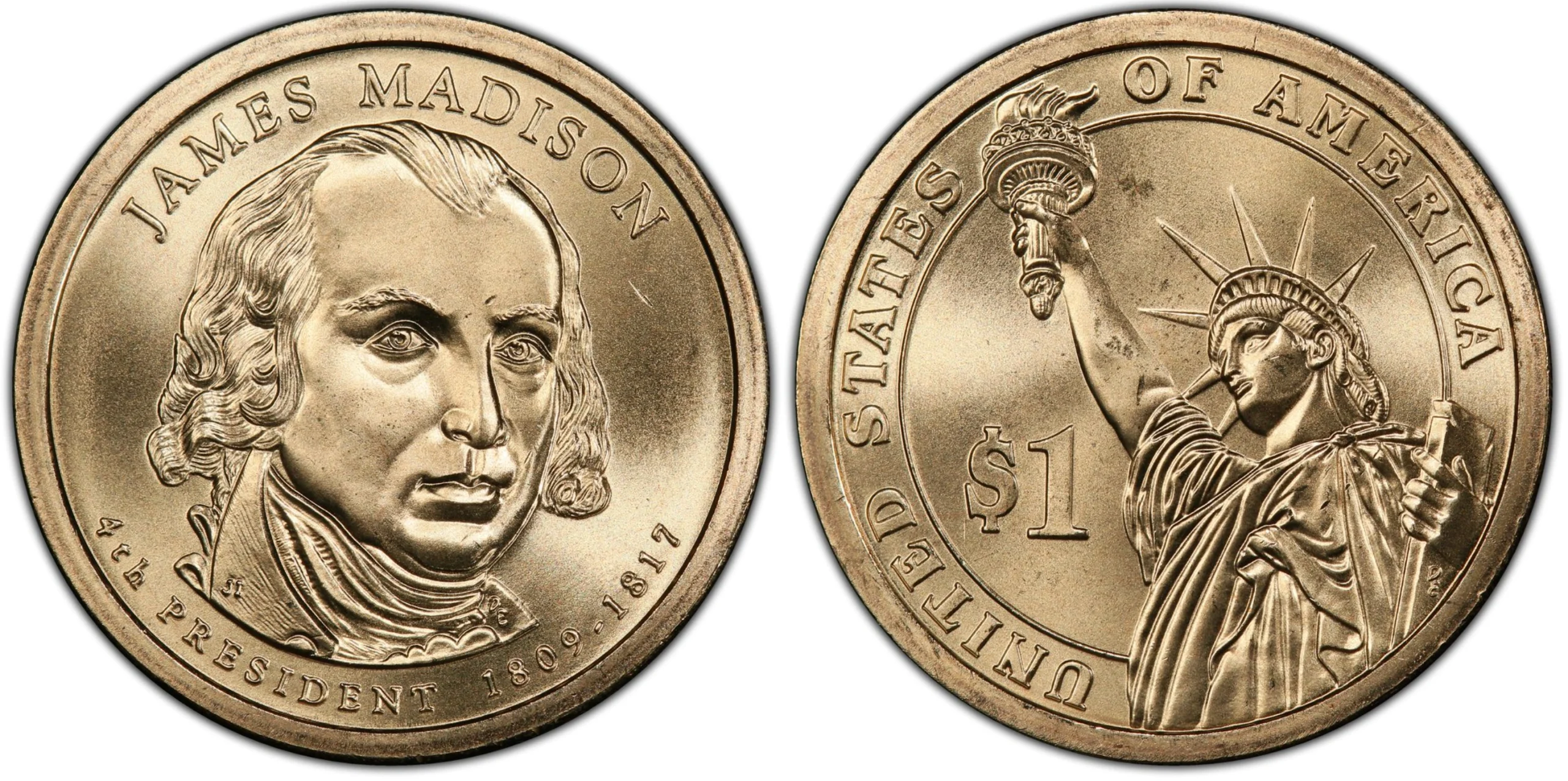
The federal government placed his portrait on one of the most valuable banknotes in American history – the James Madison dollar coin, and bills over the years have cost more and more dollars, reaching $50,000.
$5,000 Bill
The banknotes with James Madison represent a bygone period of American federal finance when the government issued giant paper denominations for specialized use.
| Year | 1928 |
| Composition | Paper |
| Size | 156×67 mm |
1918 & 1934 Bill History
1918 Large-Size Note
The Bureau of Engraving and Printing produced two primary types of $5,000 bills that featured James Madison. First came the Series 1918 Large-Size Federal Reserve Note. This note carried a blue seal and featured an intricate vignette on the reverse that depicted Washington resigning his commission.
Distribution through the Federal Reserve
The Treasury Department distributed these notes exclusively through the Federal Reserve system.
Why Did the U.S. Government Discontinue High-Denomination Bills?
- Electronic banking took over
- Prevented money laundering
- Nixon banned them in 1969
The public rarely saw a $5,000 bill in general commerce. Commercial banks utilized these large notes to settle balances with other financial institutions before the invention of secure wire transfer networks.
The 2007 James Madison Presidential $1 Coin
In 2007, the United States Mint brought James Madison back into physical circulation via the Presidential $1 Coin Program. This multi-year series honored each deceased president in chronological order.
| Year | 2007 |
| Diameter | 26.50 mm |
| Weight | 8.10 g |
| Metal | Mostly Copper |
| Edge | Lettered |
Mintage Figures and Production at Philadelphia and Denver
The United States Mint struck the James Madison dollar coin during the first year of the program. The Philadelphia Mint produced 84,560,000 coins, while the Denver Mint struck an additional 87,780,000 pieces.
Because combined production exceeded 172 million coins, standard circulated examples hold no bonuses over face value today. You can still obtain them from local banks at face value.
The Edge-Lettering Innovation (In God We Trust)
The Presidential Dollar series introduced a major design change: edge lettering. To maximize the space for Madison’s portrait on the obverse and the Statue of Liberty on the reverse, mint workers moved:
- The date
- The mint mark
- The motto
This required an entirely separate manufacturing step after the initial strike. Check coin-identifier.com for more design coin changes.
Valuable 2007 Madison Dollar Errors to Look For
The secondary edge-lettering process created a goldmine for error hunters. Minor mechanical failures on the production lines yielded spectacular errors that now carry hefty collector premiums.
The “Godless” Madison Dollar (Missing Edge Lettering)
The most famous error from the 2007 release occurs when a batch of struck coins completely bypassed the edge-lettering machine. Because the edge remains perfectly smooth, these coins lack a date, a mint mark, and the official national mottoes. Collectors call this variety the “Godless” Madison Dollar. Genuine uncirculated examples of this error sell for $30 to $65 on online coin forums.
Satin Finish & Business Strike Condition Rarities
Satin Finish items are inside official annual uncirculated sets. These coins feature smooth surfaces. While a normal business strike Madison dollar in Mint State 67 condition brings around $15, a top-grade Satin Finish item can fetch over $100 because of its scarcity.
James Madison Currency Price Guide
The pricing data below outlines the current market values for the various forms of James Madison currency, spanning from modern daily coins to elite vintage paper notes.
| Item | Circulated | Uncirculated |
| 2007-P / 2007-D | $1.00 | $1.50–$3.00 |
| 2007-P Missing Edge Lettering Error | $25.00 | $45.00–$75.00 |
| 2007-S Proof | – | $3.00–$5.00 |
| 1993 Silver $ | $28.00 | $35.00–$50.00 |
| Series 1934, $5,000 | $50,000 | $150,000–$250,000+ |
Commemorative Tributes: James Madison Silver and Gold Coins
- Honored the Bill of Rights in 1993
- Targeted collectors exclusively
- Struck copper-nickel half dollars
- Minted 90% silver dollars
- Produced $5 gold coins
- Value relies on bullion and numismatics
The Details
In 1993, the United States Mint launched a special commemorative coin program to mark the 200th anniversary of the Bill of Rights, which Madison drafted. This program targeted collectors and did not enter general circulation.
The Mint struck a copper-nickel half dollar featuring Madison studying the Bill of Rights, alongside a 90 % fine silver $ that depicts his portrait next to Montpelier, his Virginia estate.
For high-end buyers, the Mint also produced a $5 gold coin showing Madison holding a quill pen. Today, these coins trade based on a combination of their precious metal weight and their numismatic appeal, with the silver dollar averaging $35 to $50 in its original velvet box.
Is Currency Featuring James Madison a Good Investment?
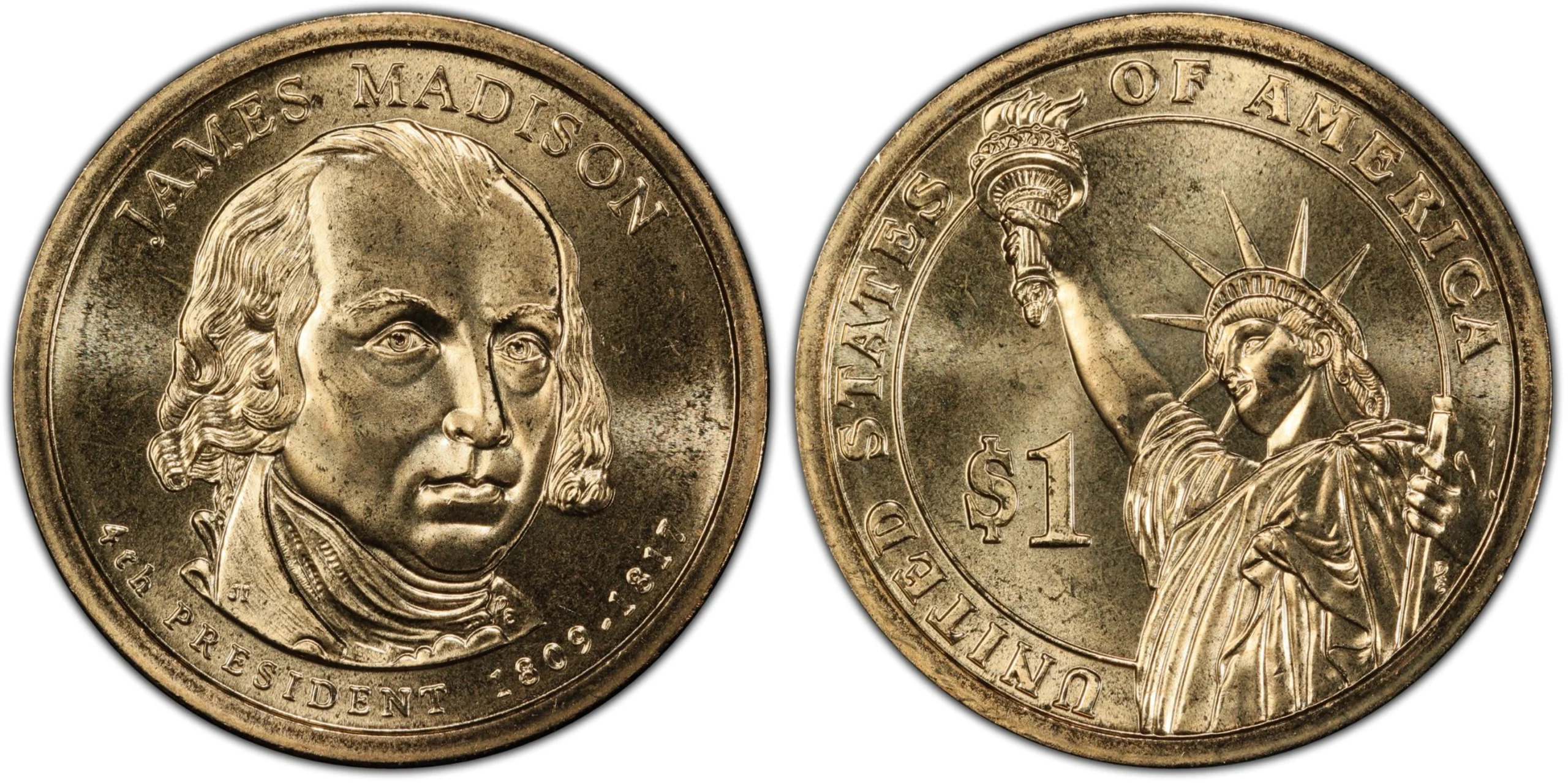
If you approach James Madison currency as an investment, your financial success depends entirely on the scarcity of the item you choose.
Standard 2007 Presidential dollars do not offer investment potential. The massive mintage ensures that supply will always meet demand and keep prices anchored to the $1 face value floor.
Conversely, vintage high-denomination paper assets represent a true blue-chip investment category. The Series 1918 and Series 1934 bills feature an absolute supply cap that shrinks over time due to accidental loss or museum donations. Wealthy collectors actively vie for these notes to complete high-end collections and make the James Madison $5,000 bill an outstanding, historical store of value.